How to budget for a 4-bedroom house in a family-friendly neighborhood in Israel?
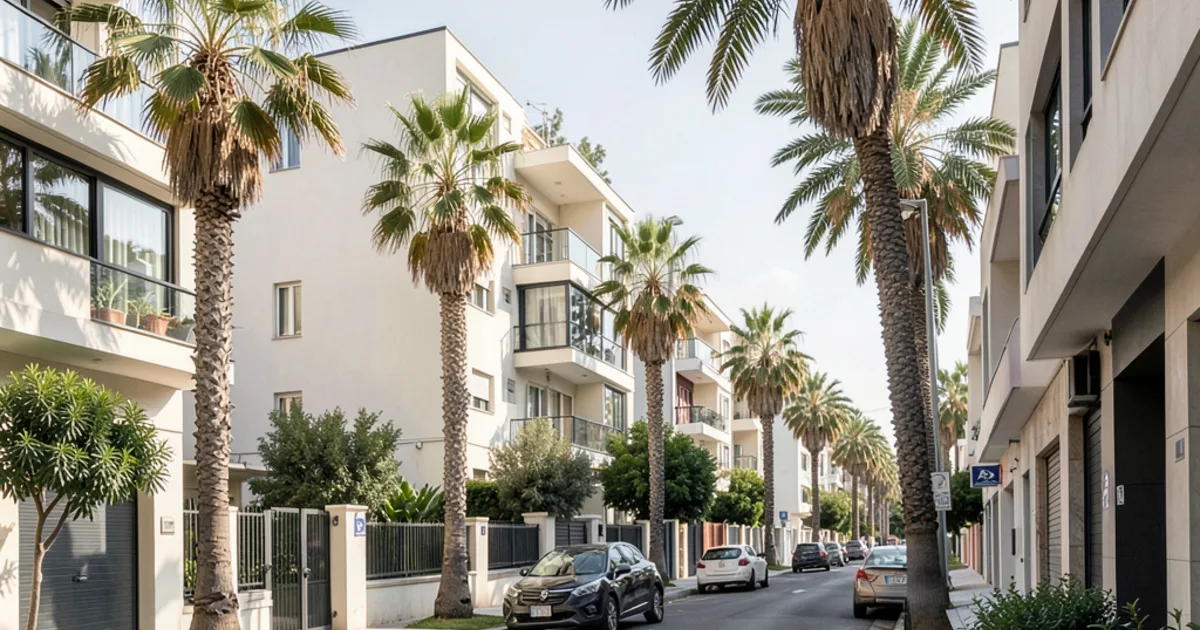
Finding a spacious 4-bedroom home is a primary goal for many growing families planning their future in Israel. However, the sticker price seen on real estate portals is only the beginning of your financial commitment. To build a sustainable budget, you must account for taxes, legal fees, financing, and the ongoing costs of local living. This guide provides a comprehensive breakdown to help you prepare for a successful property acquisition.
- The Financial Blueprint: Beyond the Listing Price
- Understanding Mas Rekhisha (Purchase Tax) Tiers
- Legal Protections and Administrative Fees
- Structuring Your Mashkanta (Mortgage) Strategy
- Location Dynamics: Centrality vs. Affordability
- Renovation Budgets for Older 4-Bedroom Homes
- Calculating Monthly Ownership Costs (Arnona and Beyond)
- The Aliyah Factor: Transitioning to Israeli Real Estate
- Investment Considerations and Mas Shevah
- Due Diligence: Avoiding Hidden Financial Traps
The Financial Blueprint: Beyond the Listing Price
When searching for a 4-bedroom house, many buyers make the mistake of focusing solely on the asking price. In the Israeli market, the 'sticker price' is merely the foundation of your total expenditure. A realistic budget must encompass the acquisition cost, government taxes, professional fees, and immediate post-purchase requirements. Neglecting these secondary costs can lead to significant financial strain during the closing process.
A 4-bedroom home implies a certain level of square footage and land ownership, which naturally places it in a higher price bracket than smaller apartments. Whether you are looking at a detached villa or a large family apartment, the scale of the property dictates the complexity of your budget. You must account for the fact that larger homes often come with higher maintenance requirements and more significant utility footprints. This initial planning phase is crucial for ensuring you do not overextend your liquid assets.
Furthermore, you should consider the timing of your cash flow. While some costs, like the purchase tax, are paid upfront, others, like renovations or moving expenses, may be spread over several months. A well-structured budget categorizes these into 'immediate' and 'short-term' expenses. This distinction allows you to maintain a safety net for the unexpected adjustments that frequently arise in the Israeli real estate landscape.
Ultimately, your goal is to move from a mindset of 'how much does the house cost' to 'how much does the lifestyle cost.' A 4-bedroom home is an investment in your family's stability, but it requires a holistic financial view. By acknowledging the various layers of cost, you position yourself as a prepared and serious buyer in a competitive market.
- Property acquisition price (the base cost)
- Government-mandated purchase taxes
- Professional and legal service fees
- Immediate renovation or furniture needs
Understanding Mas Rekhisha (Purchase Tax) Tiers
One of the most critical components of your budget is Mas Rekhisha, the Israeli purchase tax. This is not a flat fee but a progressive tax calculated based on the total value of the property. For a larger 4-bedroom residence, the tax burden can be substantial, as the property value often pushes the calculation into higher percentage brackets. It is essential to calculate this early to avoid a liquidity crisis at the time of signing.
The taxation structure differs significantly depending on your status as a buyer. If you are purchasing the property as your primary residence, you may benefit from certain thresholds or exemptions that are not available to investors. Conversely, if you are buying the house as a holiday home or an investment property, the tax rates are generally higher. This distinction can change your total budget by a significant margin, making it a vital detail to clarify with a professional.
It is also important to understand how the tax is calculated relative to the property's value. The government applies different rates to different portions of the total price, meaning the more expensive the house, the higher the effective tax rate becomes. For a family looking at a high-end 4-bedroom home in a central district, the tax component can represent a significant portion of the total transaction cost. Always ensure your budget accounts for the highest possible tier to remain safe.
Navigating these tiers requires precision and an understanding of current government regulations. While the tax is a mandatory part of the transaction, knowing exactly how it applies to your specific situation allows for better long-term financial planning. Never assume you know the tax amount without verifying it against the latest official tables provided by the tax authorities.
- Progressive tax tiers based on property value
- Exemptions and benefits for primary residents
- Higher rates for investors and secondary homes
- Impact of location and size on total tax liability
Legal Protections and Administrative Fees
The legal process of buying property in Israel involves several layers of documentation and verification. You will need to engage a qualified lawyer to handle the complexities of the transaction and protect your interests. This professional will be responsible for reviewing the binding memorandum, ensuring the title is clear, and managing the transfer of funds. Their fee is a necessary component of your budget and should be factored in from the start.
A major part of the legal work involves the Tabu, which is the official land registry. Your lawyer will perform due diligence to ensure that the property is correctly registered and that there are no hidden liens or legal disputes attached to the land. This step is vital for a 4-bedroom home, which might involve complex land ownership structures or shared communal areas. Ensuring the property is 'clean' in the Tabu is the best way to protect your massive investment.
In addition to legal fees, you should budget for various administrative and notary costs. Notaries are often required for translating documents, certifying signatures, or handling specific powers of attorney, especially for buyers moving from abroad. These smaller fees can accumulate, so it is wise to set aside a contingency fund for administrative overhead. While they may seem minor compared to the house price, they are essential for a smooth closing.
The binding memorandum, or the contract of sale, is the most important document you will sign. This document outlines all the terms of the deal, including the payment schedule, delivery date, and any conditions for the sale. Having a lawyer review this document is not just a recommendation; it is a necessity for any family making a major life commitment. A mistake in this document can lead to years of legal headaches and financial loss.
- Legal fees for contract review and transaction management
- Due diligence and Tabu land registry verification
- Notary fees for document authentication and translation
- Costs associated with the binding memorandum
Structuring Your Mashkanta (Mortgage) Strategy
For most families, purchasing a 4-bedroom home requires a Mashkanta, or a mortgage. Financing a large property involves more than just finding a bank; it requires a strategic approach to interest rates and repayment terms. You must decide between fixed-rate and variable-rate options, each of which carries different risks and benefits for your long-term budget. A well-planned mortgage can provide stability, while a poorly chosen one can lead to financial volatility.
The down payment is the first major hurdle in your mortgage journey. In Israel, banks typically require a significant percentage of the property value as an upfront equity contribution. For a 4-bedroom home, this amount can be quite large, requiring substantial liquid savings. It is important to ensure that your down payment does not leave you completely cash-poor, as you will still need funds for taxes, legal fees, and immediate moving costs.
Beyond the principal and interest, you must account for the various fees associated with obtaining a mortgage. Banks often charge for appraisals, legal evaluations of the property, and administrative processing. Additionally, you may need to consider the cost of life insurance and property insurance, which are often mandatory components of a Mashkanta. These recurring costs should be integrated into your monthly household budget to ensure you can comfortably meet your obligations.
When calculating your borrowing capacity, consider the impact of interest rate fluctuations. Even if you choose a partially fixed-rate mortgage, some portions may be subject to market changes. A prudent approach is to stress-test your budget against potential rate increases. This ensures that your family can maintain its standard of living even if the cost of debt rises unexpectedly over the next decade or two.
- Down payment requirements and equity contribution
- Interest rate structures (fixed vs. variable)
- Mandatory insurance (life and property)
- Bank administrative and appraisal fees
Location Dynamics: Centrality vs. Affordability
The location of your 4-bedroom house will be the single largest driver of its price. In Israel, there is a stark contrast between the high-demand central districts and the more affordable periphery. Families often face a difficult choice: do you pay a premium to live near major economic hubs and schools, or do you seek more space and a larger garden in a more distant city? Both options have significant implications for your total budget and lifestyle.
Living in a central, family-friendly neighborhood often means higher property values and higher competition. These areas are highly sought after due to their proximity to employment centers, high-quality educational institutions, and cultural amenities. However, the cost of entry is much higher, and you may find that your budget buys a smaller 4-bedroom apartment rather than a detached house. You must weigh the convenience of a short commute against the higher monthly mortgage and tax costs.
On the other hand, moving toward the periphery can offer much better value for your money. In these regions, a similar budget might secure a large, detached 4-bedroom villa with a substantial yard. This can provide a superior quality of life for growing children and more physical space for your family. However, you must factor in the 'hidden' costs of the periphery, such as increased transportation expenses and potentially longer commutes to major cities.
When evaluating a location, do not just look at the house price. Consider the local infrastructure, the quality of the municipal services, and the long-term appreciation potential of the area. A neighborhood that is currently affordable but is slated for major infrastructure improvements can be a wise long-term investment. Always research the specific municipality to understand the local landscape before committing your capital.
Renovation Budgets for Older 4-Bedroom Homes
Many families find that the most affordable 4-bedroom homes are older properties that require updating. While these homes offer character and often more space, they come with the necessity of a renovation budget. It is a common mistake to buy an older home and assume the purchase price is the final cost. You must account for everything from cosmetic updates to major structural or systemic improvements.
Renovations can range from simple aesthetic changes, such as new flooring and paint, to extensive overhauls like kitchen remodeling or adding an extra room. In a 4-bedroom house, the scale of these projects can be significant. A modern kitchen and updated bathrooms are often the most expensive components of a renovation, but they also offer the highest return on investment and the greatest impact on your daily comfort. Always budget more than you think you will need for these projects.
You should also consider the technical aspects of the home, such as the electrical system, plumbing, and HVAC (air conditioning). Older homes may require significant upgrades to meet modern standards of efficiency and safety. These 'invisible' renovations are essential for a healthy living environment but can quickly deplete your contingency funds if they are not planned for. It is highly recommended to hire a professional inspector to identify these issues before you sign a contract.
Finally, remember that renovation costs are often subject to inflation and the availability of skilled labor. In a growing market, the cost of materials and contractors can fluctuate. It is wise to obtain multiple quotes from local contractors and to include a buffer of at least twenty percent in your renovation budget. This ensures that when the unexpected arises, as it almost always does in construction, your family's financial stability remains intact.
- Cosmetic updates (flooring, paint, lighting)
- Major functional upgrades (kitchen, bathrooms)
- Systemic improvements (plumbing, electrical, HVAC)
- Contingency funds for construction surprises
Calculating Monthly Ownership Costs (Arnona and Beyond)
Once you have successfully moved into your new 4-bedroom home, your financial focus will shift from acquisition to maintenance. Ongoing ownership costs are a permanent part of your monthly budget. In Israel, one of the most significant recurring expenses is Arnona, the municipal property tax. Arnona is calculated based on the size of the property, its location, and its intended use, and it can be quite substantial for a large family home.
For those living in an apartment building, you must also budget for 'Va'ad Bayit,' the building committee fees. These fees cover the maintenance of communal areas, such as elevators, hallways, gardens, and security services. In a larger building with many amenities, these costs can be significant. It is important to ask the seller or the local agency for a clear understanding of the current monthly Va'ad Bayit before you make an offer.
Utility costs also scale with the size of your home. A 4-bedroom house will naturally consume more electricity for air conditioning, more water for gardening and hygiene, and more gas for heating. These monthly bills should be estimated realistically to avoid surprises in your household cash flow. As a growing family, these expenses will likely increase over time as your consumption patterns evolve.
In summary, your monthly budget should not just account for your mortgage, but for the entire ecosystem of homeownership. This includes Arnona, Va'ad Bayit, utilities, and a fund for general maintenance. By treating these as non-negotiable monthly commitments, you can manage your family's finances with much greater confidence and security.
- Arnona (municipal property tax) based on size/location
- Va'ad Bayit (building committee fees) for apartments
- Utility bills (electricity, water, gas)
- General maintenance and repair reserves
The Aliyah Factor: Transitioning to Israeli Real Estate
For those preparing for Aliyah, the process of budgeting for a home in Israel involves unique challenges. You are not just managing a real estate transaction; you are managing a major life transition. This often means you may be navigating the Israeli system while still settling into a new culture and language. It is vital to plan your finances with an understanding of the 'transition period' where multiple costs may overlap.
Newcomers often face a period where they are simultaneously paying for temporary housing, Ulpan (Hebrew language studies), and potentially a mortgage or property taxes. This dual-expense period can be very taxing on your savings. It is wise to build a 'transition buffer' into your budget that covers at least six to twelve months of living expenses. This ensures that you can focus on integration and language learning without the immediate pressure of real estate debt.
The Jewish Agency and other public institutions can be invaluable resources during this time, providing guidance and support for new immigrants. However, they do not provide financial advice regarding specific real estate deals. You should seek out professional advisors who are accustomed to working with English-speaking clients to bridge the gap between your home country's systems and the Israeli market. Having an advisor who understands your specific context can prevent costly misunderstandings.
Finally, consider the long-term integration of your home into your new life. A 4-bedroom house is more than just a building; it is the base from which you will build your new Israeli community. Ensure that your budget allows for the social and cultural aspects of integration, such as joining local organizations or hosting community events. A home that is financially sustainable is the best foundation for a successful Aliyah.
Investment Considerations and Mas Shevah
While many families buy a 4-bedroom home as a primary residence, some may view it through an investment lens. If you are purchasing a property with the intention of renting it out or selling it later for a profit, your budgeting strategy must change. You need to account for the tax implications of selling an asset in Israel, most notably Mas Shevah, the capital gains tax.
Mas Shevah is a tax applied to the profit made from the sale of real estate. For a primary residence, there are often significant exemptions or reductions available, but these do not apply to investment properties in the same way. If you are buying a 4-bedroom home as a rental, you must factor this potential tax into your long-term exit strategy. Failing to do so can significantly diminish your actual return on investment.
Furthermore, an investment property requires a different approach to maintenance and management. You may need to budget for property management services, tenant insurance, and the inevitable repairs that come with rental units. The goal is to ensure that the rental income covers these costs and the mortgage, while still providing a net profit. This requires a much more disciplined and mathematical approach to budgeting than a primary residence purchase.
Whether you are a family seeker or an investor, always consider the 'exit' before you enter. Ask yourself how easy it will be to sell this 4-bedroom home in the future and what the tax consequences will be. A property that is easy to liquidate and has a predictable tax profile is always a safer bet for your financial future.
- Mas Shevah (capital gains tax) on property appreciation
- Tax differences between primary and investment properties
- Property management and tenant-related expenses
- Long-term ROI and exit strategy planning
Due Diligence: Avoiding Hidden Financial Traps
The final step in budgeting for a 4-bedroom house in Israel is the implementation of rigorous due diligence. Even with a large budget, unforeseen issues can arise if you are not careful. This includes physical defects in the property, legal encumbrances, or even zoning issues that might prevent you from expanding the home later. Due diligence is the process of verifying that what you are paying for is actually what you are receiving.
A professional property inspection (Bdidat Bayit) is an absolute necessity. An inspector will look for structural issues, dampness, electrical faults, and plumbing problems that are not visible to the untrained eye. For a large 4-bedroom home, these issues can be incredibly expensive to fix. The cost of an inspector is a tiny fraction of the total budget, but the value they provide in preventing a financial disaster is immeasurable.
You should also investigate the local municipality's master plan for the area. Are there plans to build a large commercial complex next to your quiet family neighborhood? Is there a new highway planned that might increase noise levels? These 'externalities' can affect both your quality of life and the future resale value of your home. Knowledge of local zoning and development plans is a key part of a sophisticated buyer's due diligence.
Finally, never rely solely on the information provided by a seller or a real estate agent. While they may be helpful, their primary goal is to facilitate a sale. Always verify information through official channels, such as the Tabu or the local municipality. By being proactive and skeptical, you protect your family's hard-earned capital and ensure that your 4-bedroom home is a true asset rather than a liability.
FAQ
How much of a down payment is typically required in Israel?
While requirements can vary based on the bank and your specific profile, most lenders expect a significant equity contribution. For a large 4-bedroom home, you should generally prepare to have a substantial amount of liquid savings to cover this initial requirement.
What is the role of the Tabu in the home-buying process?
The Tabu is the official land registry of Israel. It is used to verify that the seller actually owns the property and to ensure there are no legal liens or claims against the land, providing essential security for your purchase.
Are there extra costs when buying a brand-new 4-bedroom house?
Yes, new builds often involve different considerations, such as 'linkage' fees or specific costs related to the developer's obligations. You should also account for the fact that new homes may require more immediate interior finishing and landscaping.
How does Arnona work for a large family home?
Arnona is a municipal tax paid to your local city council. For a 4-bedroom house, the amount is calculated based on the square meters of the property and the specific zone it is located in, so it is higher than for a small apartment.
Get your personalised shortlist
Listings and up-to-date info, straight to your inbox, free, no obligation.
Start my search →